Showing posts with label dementia study. Show all posts

Friday, July 12, 2019

How nuts help the brain

Image result for peanuts pictures

Caregivers, and healthcare professionals,here is some great information

Here is a great dementia resource for caregivers and healthcare professionals,

Follow alzheimersideas on twitter

The Dementia Caregiver's Little Book of Hope [Kindle Edition]

Your residents will love the Amazon Kindle Fire

Here is information on being the best caregiver you can be

Here is a way for nurses administrators, social workers and other health care  professionals to get an easyceu or two

University of South Australia

In 4,000 elders, nuts boosted cognition by 60% and delayed memory decline by 2 years. See the "Healthy Nuts" chart, detailing the benefits of 10 different nuts. Watch these videos to learn why long-term, high nut consumption is a key to better thinking in older adults. 


Long-term, high nut consumption could be the key to better cognitive health in older people according to new research from the University of South Australia. 


In a study of 4822 Chinese adults aged 55+ years, researchers found that eating more than 10 grams of nuts a day was positively associated with better mental functioning, including improved thinking, reasoning and memory.

Cognition & Nut Intake

Lead researcher, UniSA's Dr Ming Li, says the study is the first to report an association between cognition and nut intake in older Chinese adults, providing important insights into increasing mental health issues (including dementia) faced by an ageing population. 

"Population aging is one of the most substantial challenges of the twenty-first century. Not only are people living longer, but as they age, they require additional health support which is placing unprecedented pressure on aged-care and health services," Dr Li says.

Nuts are a Preventative Dietary Modification

"In China, this is a massive issue, as the population is ageing far more rapidly than almost any other country in the world. 

"Improved and preventative health care -- including dietary modifications -- can help address the challenges that an aging population presents.

Two Teaspoons Vs. No Teaspoons of Nuts

"By eating more than 10 grams (or two teaspoons) of nuts per day older people could improve their cognitive function by up to 60 per cent- compared to those not eating nuts -- effectively warding off what would normally be experienced as a natural two-year cognition decline." 

China has one of the fastest growing aging populations. In 2029, China's population is projected to peak at 1.44 billion, with the ratio of young to old dramatically imbalanced by the rising ranks of the elderly. By 2050, 330 million Chinese will be over age 65, and 90.4 million will be over age 80, representing the world's largest population of this most elderly age group.

17% Consume Nuts Regularly

More broadly, the World Health Organization says that by 2020, the number of people aged 60 years and older will outnumber children younger than five years old. 

The UniSA study analysed nine waves of China Health Nutrition Survey data collected over 22 years, finding that 17 per cent of participants were regular consumers of nuts (mostly peanuts). Dr Li says peanuts have specific anti-inflammatory and antioxidant effects which can alleviate and reduce cognitive decline.

No Cure, But Nuts Offer Improvements

"Nuts are known to be high in healthy fats, protein and fibre with nutritional properties that can lower cholesterol and improve cognitive health," Dr Li says. 

"While there is no cure for age-related cognition decline and neurogenerative disease, variations in what people eat are delivering improvements for older people." 

The World Health Organization estimates that globally, the number of people living with dementia is at 47 million.

Modifying Diet Worth the Effort

By 2030, this is projected to rise to 75 million and by 2050, global dementia cases are estimated to almost triple. China has the largest population of people with dementia.x 

"As people age, they naturally experience changes to conceptual reasoning, memory, and processing speed. This is all part of the normal ageing process," Dr. Li says. 

"But age is also the strongest known risk factor for cognitive disease. If we can find ways to help older people retain their cognitive health and independence for longer -- even by modifying their diet -- then this absolutely worth the effort." 


Monday, June 24, 2019

How B vitamins decrease brain loss

Caregivers, and healthcare professionals,here is some great information

Here is a great dementia resource for caregivers and healthcare professionals,

Follow alzheimersideas on twitter

The Dementia Caregiver's Little Book of Hope [Kindle Edition]

Your residents will love the Amazon Kindle Fire

Here is information on being the best caregiver you can be

Here is a way for nurses administrators, social workers and other health care  professionals to get an easyceu or two


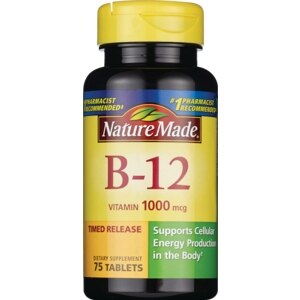
Nature Made Vitamin B-12 Timed Release Tablets 1000 mcg

The American Academy of Neurology

ST. PAUL, Minn. – A key study shows that vitamin B12 may protect against Alzheimer’s, adding more evidence to the scientific debate about whether the vitamin is effective in reducing risk of memory loss. The research is published in Neurology®, the medical journal of the American Academy of Neurology


“Our findings show the need for further research on the role of vitamin B12 as a marker for identifying people who are at increased risk of Alzheimer’s disease,” said study author Babak Hooshmand, MD, MSc, with Karolinska Institutet in Stockholm, Sweden. “Low levels of vitamin B12 are surprisingly common in the elderly. However, the few studies that have investigated the usefulness of vitamin B12 supplements to reduce the risk of memory loss have had mixed results.”

For the seven-year study, researchers took blood samples from 271 Finnish people age 65 to 79 who did not have dementia at the start of the study. During that time, 17 people developed Alzheimer’s disease. Blood samples were tested for levels for homocysteine, an amino acid associated with vitamin B12, and for levels of the active portion of the vitamin, called holotranscobalamin. Too much homocysteine in the blood has been linked to negative effects on the brain, such as stroke. However, higher levels of vitamin B12 can lower homocysteine.

The study found that for each micromolar increase in the concentration of homocysteine, the risk of Alzheimer’s disease increased by 16 percent, whereas each picomolar increase in concentration of the active form of vitamin B12 reduced risk by two percent. The results stayed the same after taking into account other factors, such as age, gender, education, smoking status, blood pressure and body mass index. The addition of folate did not appear to raise or lower the risk of Alzheimer’s disease.
“More research is needed to confirm these findings before vitamin B12 should be used solely as a supplement to help protect memory,” said Hooshmand.

Vitamin B12 can be found in fish, poultry and other meat products.

MORE INFORMATION:
  • The study was supported by the Karolinska Institutet, the Swedish Research Council for Medical Research, the European Commission Seventh Framework Programme, the Academy of Finland, the Ragnhild and Einar Lundströms Minne Lindhés Foundation, the Stohnes Foundation, the Gamla Tjanarinnor Foundation and the Dementia Foundation of Sweden.
SOURCE:
  • The American Academy of Neurology, an association of more than 22,000 neurologists and neuroscience professionals, is dedicated to promoting the highest quality patient-centered neurologic care. A neurologist is a doctor with specialized training in diagnosing, treating and managing disorders of the brain and nervous system such as epilepsy, dystonia, migraine, Huntington’s disease, and dementia. For more information about the American Academy of Neurology, visit http://www.aan.com.
. 

Thursday, April 4, 2019

is there a drug for dementia and osteoporosis

Caregivers, and healthcare professionals,here is some great information

Here is a great dementia resource for caregivers and healthcare professionals,

Follow alzheimersideas on twitter

The Dementia Caregiver's Little Book of Hope [Kindle Edition]

Your residents will love the Amazon Kindle Fire

Here is information on being the best caregiver you can be

Here is a way for nurses administrators, social workers and other health care  professionals to get an easyceu or two


Elsevier
MEDICATION: The most common drug for Alzheimer's also increases bone mass in mice. Find out what this means for people with dementia in fear of bone fractures, as well as conditions like osteoporosis or periodontitis. 


The most common drug used to treat Alzheimer's disease increases bone mass in mice, according to a groundbreaking research article published in the open access journal Heliyon. The authors of the study, from Saitama Medical University in Japan, say this means the drug could also be used to treat bone loss diseases like osteoporosis and periodontitis, following further clinical research.

Alzheimer's disease is the most common form of dementia and the incidence is increasing in our aging population. In the early stages of Alzheimer's disease, bone density decreases, putting patients at a higher risk of bone fractures.

Donepezil (Brand name : Aricept®)

The new Heliyon study suggests that treating Alzheimer's disease with a drug called donepezil (Brand name : Aricept®) not only improves cognitive function but also increases bone density, reducing the risk of fractures.

"We think that donepezil can improve cognitive function and increase bone mass, making it a very useful drug for patients with dementia and osteoporosis," said lead author Dr. Tsuyoshi Sato, Associate Professor in the Department of Oral and Maxillofacial Surgery, Saitama Medical University. "From the viewpoint of medical economics, this dual purpose could reduce the cost of treating these diseases."

Bone Mass & Density

Two different kinds of cell control the bone mass and density in our bodies: osteoblasts make bone and osteoclasts absorb it. A molecule called acetylcholine causes osteoclasts to die in vitro. Although an enzyme called acetylcholinesterase breaks this molecule down, the effect of this enzyme on osteoclasts remains unclear.

The most common drug used to treat Alzheimer's disease, donepezil, stops acetylcholinesterase from working, leading to an increase in the amount of acetylcholine in the brain. Recent retrospective clinical studies have suggested that patients being treated with donepezil for Alzheimer's disease have a lower risk of hip fracture, and that risk was dependent on the dose they were taking.

The researchers wanted to understand how donepezil prevents bone degradation. They looked at the drug's activity in vitro using mouse bone marrow cells, and found that more acetylcholinesterase is produced when osteoclasts are being made, which leads to even more osteoclasts being made. Donepezil stops acetylcholinesterase from working, therefore preventing osteoclasts from being made.

Surprising Point

The team also looked at the effect of the drug in a mouse model with bone loss. They found that donepezil increases bone mass in mice by preventing the production of osteoclasts.

"We were surprised to see that donepezil directly inhibits the production of osteoclasts and subsequently increases bone mass in vivo," said Dr. Sato. "This is very surprising point - donepezil directly controls the molecule that is responsible for macrophages becoming osteoclasts."

Previous research has shown that acetylcholinesterase activity increases continuously with age, and may accelerate the risk of bone loss in elderly people. The researchers noted that the concentration of acetylcholinesterase in macrophages was higher when the tissue was inflamed. This suggests that inflammation causes bone to be degraded in part due to acetylcholinesterase production.

"Our findings are very promising and suggest that there is a role for donepezil in increasing bone mass in elderly patients with inflammation and dementia," said Dr. Sato. "There is still work to be done and we look forward to observing the effect of this drug in patients."

The team now plans to work with the Department of Neurology at Saitama Medical University on clinical research. They plan to study whether taking donepezil reduces patients' risk of bone fracture by looking at its effect in a group of patients compared to a control group.


MORE INFORMATION:
"Donepezil prevents RANK-induced bone loss via inhibition of osteoclast differentiation by downregulating acetylcholinesterase" by Sato et al. (doi: 10.1016/j.heliyon.2015.e00013). The article appears in Heliyon (September 2015), published by Elsevier.

SOURCE:
Elsevier

Friday, December 7, 2018

Dementia risk increases by 53% with vitamin D deficiency

Caregivers, and healthcare professionals,here is some great information

Here is a great dementia resource for caregivers and healthcare professionals,

Follow alzheimersideas on twitter

The Dementia Caregiver's Little Book of Hope [Kindle Edition]

Your residents will love the Amazon Kindle Fire

Here is information on being the best caregiver you can be

Here is a way for nurses administrators, social workers and other health care  professionals to get an easyceu or two


American Academy of Neurology.

In the largest study of its kind, not getting enough vitamin D turned out to double the risk of developing dementia and Alzheimer’s. See why supplements may not be the answer. Find out which foods to eat.


MINNEAPOLIS – In the largest study of its kind, researchers suggest that in older people, not getting enough vitamin D may double the risk of developing dementia and Alzheimer’s disease. The study is published in the online issue of Neurology®, the medical journal of the American Academy of Neurology.


he study looked at blood levels of vitamin D, which includes vitamin D from food, supplements and sun exposure. Dietary vitamin D is found in:
  • Fatty fish such as salmon, tuna or mackerel
  • Milk
  • Eggs
  • Cheese
"We expected to find an association between low Vitamin D levels and the risk of dementia and Alzheimer's disease, but the results were surprising—we actually found that the association was twice as strong as we anticipated," said study author David J. Llewellyn, PhD, of the University of Exeter Medical School in the United Kingdom. 

For the study, 1,658 people over the age of 65 who were dementia-free had their vitamin D blood levels tested. After an average of six years, 171 participants developed dementia and 102 had Alzheimer's disease. 

The study found that people with low levels of vitamin D had a 53 percent increased risk of developing dementia and those who were severely deficient had a 125 percent increased risk compared to participants with normal levels of vitamin D. 

People with lower levels of vitamin D were nearly 70 percent more likely to develop Alzheimer's disease and those who had severe deficiency were over 120 percent more likely to develop the disease. 

The results remained the same after researchers adjusted for other factors that could affect risk of dementia, such as education, smoking and alcohol consumption. 


"Clinical trials are now needed to establish whether eating foods such as oily fish or taking vitamin D supplements can delay or even prevent the onset of Alzheimer's disease and dementia. We need to be cautious at this early stage and our latest results do not demonstrate that low vitamin D levels cause dementia. That said, our findings are very encouraging, and even if a small number of people could benefit, this would have enormous public health implications given the devastating and costly nature of dementia," said Llewellyn. 


MORE INFORMATION:
The study was supported by the National Heart, Lung, and Blood Institute, the National Institute of Neurological Disorders and Stroke, the National Institute on Aging, the Alzheimer's Association, the Mary Kinross Charitable Trust, the James Tudor Foundation, the Halpin Trust, the Age Related Diseases and Health Trust, the Norman Family Charitable Trust and the UK National Institute for Health Research. www.aan.com/patients.

The American Academy of Neurology, an association of more than 27,000 neurologists and neuroscience professionals, is dedicated to promoting the highest quality patient-centered neurologic care. A neurologist is a doctor with specialized training in diagnosing, treating and managing disorders of the brain and nervous system such as Alzheimer's disease, stroke, migraine, multiple sclerosis, concussion, Parkinson's disease and epilepsy. 


Saturday, September 8, 2018

Less dementia with high blood pressure treatment

Caregivers, and healthcare professionals,here is some great information

Here is a great dementia resource for caregivers and healthcare professionals,

Your residents will love the Amazon Kindle Fire

Here is information on being the best caregiver you can be

Here is a way for nurses administrators, social workers and other health care  professionals to get an easyceu or two

Follow alzheimersideas on twitter

The Dementia Caregiver's Little Book of Hope [Kindle Edition]


n a new study, treating blood pressure more aggressively lowered odds of developing mild cognitive impairment, a gateway to dementia. CBS News chief medical correspondent Dr. Jon LaPook explains. 


CHICAGO — The first randomized clinical trial to demonstrate that intensive blood pressure treatment reduces new cases of mild cognitive impairment (MCI), and the combined risk of MCI plus all-cause dementia, was the highlight of new research results reported at the Alzheimer’s Association International Conference (AAIC) 2018 in Chicago. 

MCI is often nicknamed "PRE-DEMENTIA". If the risk for MCI is lowered, it implies that the risk for dementia is lowered. 


Reducing Risk

The preliminary results of the SPRINT MIND trial, presented at AAIC 2018, provide the strongest evidence to date about reducing risk of MCI and dementia through the treatment of high blood pressure, which is one of the leading causes of cardiovascular disease worldwide. 

“The exciting data from innovative research studies reported at AAIC 2018 give us many reasons to be hopeful,” said Maria C. Carrillo, PhD, Alzheimer's Association Chief Science Officer. “For example, the reduction in new cases of MCI seen in the SPRINT MIND study adds credibility to the vision of future Alzheimer’s therapy that combines drugs and modifiable risk factor interventions — as we do now in cardiovascular disease.”

Better Dementia Prevention Strategies

“We welcome innovative clinical trial designs and therapeutic targets, and new methods of delivering therapies and attacking the disease, as we heard presented at AAIC,” Carrillo said. “A new therapy has not been approved in a long time. We need bold steps — from basic science all the way through clinical trials — to provide better treatments and prevention strategies for the millions of people living with Alzheimer’s and other dementias, and the millions more at risk.”

New SPRINT MIND Trial

At AAIC 2018, researchers reported preliminary results related to risk of dementia and cognitive decline from the Systolic Blood Pressure Intervention Trial (SPRINT). SPRINT is a randomized clinical trial that compares two strategies for managing high blood pressure (hypertension) in older adults: an intensive strategy with a systolic blood pressure goal of less than 120 mm Hg versus a standard care strategy targeting a systolic blood pressure goal of less than 140 mm Hg. 

SPRINT Memory and Cognition IN Decreased Hypertension (SPRINT MIND) examined whether treating for the lower blood pressure target reduces the risk of developing dementia and/or MCI. Study participants were 9,361 hypertensive older adults with increased cardiovascular risk but without diagnosed diabetes, dementia or stroke. Participant mean age was 67.9 years (35.6 percent women) and 8,626 completed at least one follow-up cognitive assessment.

Significantly Lower Rate

In SPRINT MIND, the researchers found a statistically significant 19 percent lower rate of new cases of MCI in the intensive blood pressure treatment group. The combined outcome of MCI plus probable all-cause dementia was 15 percent lower in the intensive versus standard treatment group. 

“This study shows more conclusively than ever before that there are things you can do — especially regarding cardiovascular disease risk factors — to reduce your risk of MCI and dementia,” said Carrillo. 


MORE INFORMATION:
  • Check out the NIH's Mind Your Risks® health campaign to increase awareness of the link between vascular disease and brain health.
  • AAIC is the premier annual forum for presentation and discussion of the latest Alzheimer's and dementia research. Bringing the world closer to breakthroughs in dementia science, AAIC 2018 convened more than 5,100 leading experts and researchers from around the world and featured more than 2,500 scientific presentations.
SOURCES:

Thursday, September 6, 2018

Diagnose dementia better with F-18 scans

Caregivers, and healthcare professionals,here is some great information

Here is a great dementia resource for caregivers and healthcare professionals,

Your residents will love the Amazon Kindle Fire

Here is information on being the best caregiver you can be

Here is a way for nurses administrators, social workers and other health care  professionals to get an easyceu or two

Follow alzheimersideas on twitter

The Dementia Caregiver's Little Book of Hope [Kindle Edition]

Eli Lilly and Company


At $3,000 per scan, are F18 Scans worth it? They let doctors see plaque in the brain, the main suspect behind Alzheimer's. They show doctors if, where and how much plaque there is. They can sharpen an Alzheimer's diagnosis or rule it out completely. Learn how F18 Scans improve care and diagnosis. 


INDIANAPOLIS -- Eli Lilly released important data showing that F18 beta-amyloid imaging was associated with better diagnosis and management of patients with dementia. 

There are over 100 tpyes of dementia. Some are curable, some demand different treatments than others. The differences in treatment can be critical. 

The most common type of dementia is Alzheimer's disease. It is so common that it is common for doctors to diagnose a patient with Alzheimer's when they really have a different type of dementia. This can lead to ineffective or even dangerous treatments. Furthermore, even when a person has Alzheimer's, it is challenging to treat it. Doctors usually base the medications they prescribe, as well as recommended treatments, on a somewhat subjective judgement call referred to as a "clinical diagnosis". 

With new F18 scanning technologies, doctors can actually "see" how much Alzheimer's plaque is in a person's brain, if any. They now have an objective tool to help them dramatically sharpen their diagnosis. 

To see an invterview of a patient who benefitted from an F18 Scan after he was diagnosed with dementia, watch the video,
"F18 Alzheimer's Scan Delivers Better Prescriptions & Fewer Tests". 

In this latest study from Ely Lilly, change in management  was observed in both patients who met and did not meet the Appropriate Use Criteria (AUC), which were developed by the Society of Nuclear Medicine and Molecular Imaging and the Alzheimer's Association to provide guidance on which patients are most appropriate for imaging and how best to use the results. These data were presented at the Alzheimer's Association International Conference (AAIC) by Andrew Siderowf, M.D., MSCE, medical director, Avid Radiopharmaceuticals, a subsidiary of Lilly.

"This study included patients in which there was diagnostic uncertainty by the treating physician and found that changes in diagnosis and management of Alzheimer's disease did not vary between patients depending on whether they met the Appropriate Use Criteria or not. In addition, analysis of beta-amyloid scans conducted post-diagnosis indicated that many patients being treated with medications may have potentially been misdiagnosed and inappropriately treated," said Dr. Siderowf. "While we support the development of the Appropriate Use Criteria, one of the clearest insights resulting from these data is that we need to continue to fine tune our understanding of the appropriate use of these tools and their utility for patients facing a diagnosis of Alzheimer's disease."

The objective of the study was to evaluate which patients are most likely to receive different care if they had an amyloid PET scan as part of their diagnostic work-up. In particular, the study evaluated if patients who met the working definition of the AUC would be more affected than those who did not. The AUC guidelines propose that patients who are being evaluated for dementia with atypical presentations, younger patients, and patients with unexplained mild cognitive impairment, are most appropriate for amyloid PET imaging. For the patient to be included in the study, Alzheimer's disease had to be under consideration and the treating physician had to have uncertainty regarding the diagnosis. 
To see an invterview of a patient who actually used an F18 Scan after he was diagnosed with dementia, watch the video,
"F18 Alzheimer's Scan Delivers Better Prescriptions & Fewer Tests".


Results showed that 59 percent of subjects met the working definition of AUC. Forty-seven percent of the AUC-like cases were amyloid positive compared to 62 percent of non-AUC cases. Diagnosis changed after PET scan for 58 percent of AUC cases versus 45 percent of non-AUC cases (p=0.10). The proportion of patients with change in management plan was high for both AUC (88 percent) and non-AUC (77 percent) cases. In particular, the use of Alzheimer's disease medications including cholinesterase inhibitors, or memantine, declined after a negative florbetapir F 18 scan by 20 percent (from 26/54 to 15/54 cases; p=0.002) in AUC cases and by 33 percent (from 17/27 to 8/27 cases; p=0.004) in non-AUC cases. Diagnoses for non-AUC cases in which Alzheimer's disease medications were withdrawn after a negative scan included prodromal Alzheimer's disease/mild cognitive impairment due to Alzheimer's disease (n=8), or mild cognitive impairment of uncertain etiology (n=1). This study found that patients with an uncertain diagnosis, but who are not otherwise explicitly captured by AUC, may be reasonable candidates for amyloid imaging.

"Alzheimer's disease is one of many possible causes of cognitive impairment, which can make diagnosis challenging. In fact, it is estimated that up to one in five patients clinically diagnosed with probable Alzheimer's disease during life do not exhibit Alzheimer's disease pathology upon autopsy[1],[2]," said Dr. Siderowf. "These results reinforce how knowledge of the presence or absence of amyloid pathology can substantially affect both diagnosis and management in these patients being evaluated for Alzheimer's disease or other possible causes of cognitive decline."

MORE INFORMATION:

Study Methods The impact of amyloid PET on actual patient care was examined in a previous study.[3]

In the prior study, performed at 19 clinical sites, treating physicians provided a provisional diagnosis and management plan prior to receiving results of amyloid PET imaging with florbetapir F 18. Participants' medical records for the three months immediately after imaging were abstracted to capture their actual diagnosis and management. For the current study, participants were classified as meeting an operational definition of AUC-like or not, based on pre-scan diagnosis and demographic features.

About Florbetapir F 18 Injection[6] Florbetapir F 18 is indicated for Positron Emission Tomography (PET) imaging of the brain to estimate beta-amyloid neuritic plaque density in adult patients with cognitive impairment who are being evaluated for Alzheimer's Disease (AD) and other causes of cognitive decline. A negative florbetapir F 18 scan indicates sparse to no neuritic plaques and is inconsistent with a neuropathological diagnosis of AD at the time of image acquisition; a negative scan result reduces the likelihood that a patient's cognitive impairment is due to AD. A positive florbetapir F 18 scan indicates moderate to frequent amyloid neuritic plaques; neuropathological examination has shown this amount of amyloid neuritic plaque is present in patients with AD, but may also be present in patients with other types of neurologic conditions as well as older people with normal cognition. Florbetapir F 18 is an adjunct to other diagnostic evaluations.

Limitations of Use:
  • A positive florbetapir F 18 scan does not establish a diagnosis of AD or other cognitive disorder
  • Safety and effectiveness of florbetapir F 18 have not been established for:
    • Predicting development of dementia or other neurologic condition
    • Monitoring responses to therapies
WARNINGS AND PRECAUTIONS

Risk for Image Misinterpretation and Other Errors
  • Errors may occur in the florbetapir F 18 estimation of brain neuritic plaque density during image interpretation
  • Image interpretation should be performed independently of the patient's clinical information. The use of clinical information in the interpretation of florbetapir F 18 images has not been evaluated and may lead to errors. Other errors may be due to extensive brain atrophy that limits the ability to distinguish gray and white matter on the florbetapir F 18 scan as well as motion artifacts that distort the image
  • Florbetapir F 18 scan results are indicative of the brain neuritic amyloid plaque content only at the time of image acquisition and a negative scan result does not preclude the development of brain amyloid in the future
Radiation Risk
  • Florbetapir F 18, similar to other radiopharmaceuticals, contributes to a patient's overall long‐term cumulative radiation exposure. Long-term cumulative radiation exposure is associated with an increased risk of cancer. Ensure safe handling to protect patients and health care workers from unintentional radiation exposure
MOST COMMON ADVERSE REACTIONS
  • The most common adverse reactions reported in clinical trials were headache (1.8%), musculoskeletal pain (0.7%), blood pressure increased (0.7%), nausea (0.7%), fatigue (0.5%), and injection site reaction (0.5%)
For more information about florbetapir F 18, please see the Prescribing Information athttp://pi.lilly.com/us/amyvid‐uspi.pdf.

About Eli Lilly and Company Lilly is a global healthcare leader that unites caring with discovery to make life better for people around the world. We were founded more than a century ago by a man committed to creating high-quality medicines that meet real needs, and today we remain true to that mission in all our work. Across the globe, Lilly employees work to discover and bring life-changing medicines to those who need them, improve the understanding and management of disease, and give back to communities through philanthropy and volunteerism. To learn more about Lilly, please visit us at www.lilly.com and http://newsroom.lilly.com/social-channels.

Amyvid™ is a trademark of Eli Lilly and Company.

[1] Petrovitch H, White LR, Ross GW, et al. Accuracy of clinical criteria for AD in the Honolulu-Asia Aging Study, a population-based study. Neurology. 2001;57(2):226–234.
[2] Lim A, Tsuang D, Kukull W, et al. Clinico-neuropathological correlation of Alzheimer's disease in a community-based case series. J Am Geriatr Soc. 1999;47(5):564–569.
[3] Grundman M, Pontecorvo MJ, Salloway SP, et al. Potential impact of amyloid imaging on diagnosis and intended management in patients with progressive cognitive decline. Alzheimer Dis Assoc Disord. 2013 Jan;27(1):4-15.
[4] Alzheimer's Association. 2014 Alzheimer's Disease Facts and Figures.http://www.alz.org/downloads/facts_figures_2014.pdf. Accessed on June 4, 2014.
[5] Alzheimer's Disease International. Policy Brief for Heads of Government: The Global Impact of Dementia 2013 - 2050. http://www.alz.co.uk/research/GlobalImpactDementia2013.pdf. Published December 2013. Accessed onJune 4, 2014.
[6] Amyvid [package insert]. Indianapolis, IN: Lilly USA, LLC; 2012.

SOURCE:
Eli Lilly and Company
Blog Flux Directory
alzheimersideas - whereIstand.com

Fitness is important in dementia prevention. Click below for more info